Why I Get It: Connecting on a Personal, Authentic Level Through My Eating Disorder Journey and Recovery
What Really Makes an Eating Disorder Therapist Effective?
People often assume that what makes a therapist effective is their training, and yes, I have that. I’m a doctor of clinical psychology, a Certified Eating Disorder Specialist with over 2,000 supervised hours, and I’ve worked across the full spectrum of eating disorder care: residential, PHP, IOP, and outpatient. That background matters. But it isn’t the real reason I understand eating disorders the way I do.
There’s a version of me most people will never meet, a quieter version. A girl who apologized after every sentence, who hid behind her hair and baggy clothes. She’s the reason I understand eating disorders the way I do.
Who Was I Before I Became an Eating Disorder Therapist?

The Version of Me That Didn’t Want to Exist
There were years when I didn’t feel like a person so much as a shell. I knew what it was like to feel disgust toward my body, not the casual, “ugh, I don’t like how I look today” kind, but a visceral, crawling sensation under my skin that made me want to step out of myself entirely.
What Does Shame Actually Feel Like?
I know the kind of shame that makes you sit on the shower floor and cry because you don’t know how to keep going but don’t know how to stop, either.
What Happens When Food Feels Unsafe?
I also know the panic that comes from eating something unplanned. The obsession with calories, steps, numbers, and routines. The bargaining, rules, and rituals. The mental math you never stop doing.
What About the Sadness No One Talks About?
Additionally, I know the feeling of being so unbelievably sad that even hope feels unreachable. And I know what it’s like to tell yourself: Recovery is for other people, not me, because I told myself that every day.
What Are the Consequences of an Eating Disorder No One Sees?
One of the darker parts of eating disorder recovery is carrying the losses you don’t talk about.
What Did I Lose to My Eating Disorder?
For me, one of those losses was getting kicked out of college because my eating disorder took over. Most people don’t know that. It’s not something you casually share at dinner.
But for anyone who has lived through the quiet devastation of an eating disorder, you probably know the feeling. The world slipping through your fingers, and you still clinging to the thing that’s destroying you because you don’t know who you’d be without it.
I didn’t just lose weight. I lost direction, hope, motivation, opportunities, a sense of self. And yet, even at my worst, I still told myself: “I’m fine.”
That’s how eating disorders work. They convince you that the catastrophe you’re living in is normal.
How Did I Become an Eating Disorder Therapist?
People often ask what made me want to become an eating disorder therapist. And the truth is, I didn’t begin with that plan.
What Did I Think I Was Going to Do Instead?
I originally wanted to be an elementary school teacher. I loved learning. I loved kids. I loved the idea of helping someone grow.
What Shifted As I Healed?

But as I healed, something shifted. I realized the part of me that wanted to teach was the same part of me that desperately wanted people to feel seen, deeply, accurately, and compassionately seen.
Because when I needed help the most, being understood was the part that saved me. Not being fixed. Not being directed. Not being told to “just eat.” But being understood.
What I Learned About Healing Through an Eating Disorder and Beyond
So I followed that part of me, the part that knew healing isn’t about food alone. It’s about shame. Identity. Trauma. Loneliness. Survival. And the ache to feel at home in your own body.
That’s what led me to clinical psychology, to trauma work, to specialized eating disorder training, to every hour I’ve spent sitting with clients telling their truth.
Does Your Eating Disorder Have to Look Like Mine?
I share these pieces not because I think your eating disorder looks like mine; it might not at all. Eating disorders show up differently in every person:
anorexia
bulimia
binge eating
compulsive exercise
ARFID
body dysmorphia
orthorexia
restrictive eating
emotional eating
There isn’t one path in, and there isn’t one path out.
What If Your Eating Disorder Story Is Different?
Your story may be nothing like mine. But here’s the part that matters: I don’t need your story to match mine to understand the emotions behind it.
I understand the desperation to feel safe. The fear of losing control. The shame that makes you hide. The exhaustion of managing thoughts you can’t turn off. The longing to feel normal around food. The terror of being trapped in your own body. The ache to feel seen without being exposed.
I get the why, even if the details are different.
What Does Eating Disorder Recovery Actually Require?
Eating Disorder Recovery Is Work, Not a Switch
Recovery didn’t magically happen because I wanted it. It happened because I worked for it in ways that were uncomfortable, slow, humbling, and sometimes terrifying.
Years of therapy. Years of unlearning. Years of rebuilding trust with my body. Years of challenging the parts of me that believed I wasn’t enough. Years of healing trauma I didn’t know was driving the disorder.
And the truth? Recovery didn’t make my life perfect. That’s not how healing works. But recovery made my life mine again.
What Recovery Gave Me Back
Today, my eating disorder doesn’t take up mental space. My body isn’t an enemy. Food isn’t a battlefield. Movement isn’t punishment. And my worth isn’t conditional.
I found a home inside myself, something I didn’t think was possible when I was younger.

Why Am I Sharing My Eating Disorder Journey with You?
Not to convince you of anything. Not to tell you that I’m the right therapist for you. Not to claim that I’ve lived your experience.
I’m telling you this so you know the truth: I get it. Not just clinically. Not just professionally. But personally. I know how dark it gets. I know how lonely it feels. I know how impossible recovery can seem. And I also know, from a place that feels steady now, that healing is real. That identity can be rebuilt. That your story isn’t over. And that the parts of you that feel unlovable are often the ones that need compassion the most. You don’t need to walk the same path I did. You don’t need to have the same story. You don’t need to heal the same way. You don’t need to want recovery perfectly.
You just need to know that you’re not alone in the experience of being human in a body that has felt like a battleground. That’s the part I understand. And that’s why I do this work.
Eating Disorder Recovery Support at Bloom Psychological in Orlando, FL, is Here to Help.
If any part of this felt familiar, please hear this clearly: you are not too far gone, and you are not alone. Eating disorders are isolating by design, but healing happens in connection, with support that understands both the clinical reality and the human one. At Bloom Psychological, we offer compassionate, evidence-based eating disorder therapy in Orlando, FL that honors your story, your pace, and your nervous system. Whether you are early in recovery, stuck in a cycle you cannot untangle, or looking for a therapist who truly gets both the struggle and the way through it, we are here.
Let us help you find your glow.
Learn More About Eating Disorder Therapy in Orlando, FL
Take the First Step Toward Recovery Today
Other Therapy Services at Bloom Psychological
At Bloom Psychological, we know that trauma can impact every part of life—far beyond food or body image. That’s why, in addition to Therapy for Complex Trauma and Therapy for Eating Disorders, we offer specialized support for individuals navigating a wide range of emotional challenges.
Our trauma and complex PTSD therapy helps you safely explore painful past experiences, rebuild trust in yourself, and create a foundation for deep, lasting healing. We also offer eating disorder therapy and support, and individualized support for UCF students facing stress, identity questions, and mental health concerns in the midst of a pivotal life chapter.
Wherever you are in your healing journey, Bloom Psychological offers a compassionate, trauma-informed space to be seen, heard, and supported.
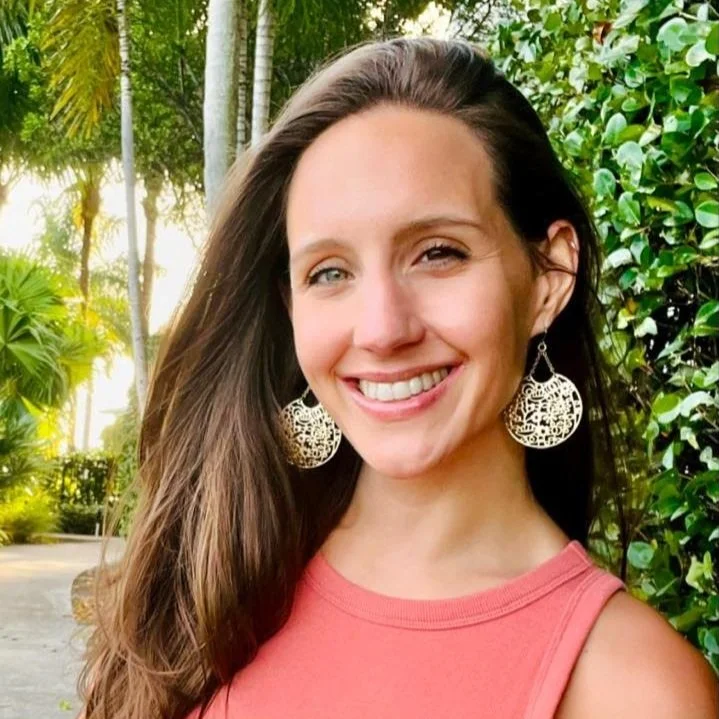
About the Author
Florida may be where I live now, but my Jersey upbringing is still a big part of how I move through the world: direct, grounded, and genuine. That same authenticity shapes how I work with clients and how I write pieces like this one. I want these blogs to feel like a steady hand on your back, especially if you are navigating complex trauma, people-pleasing patterns, or eating disorder recovery, and wondering why certain seasons feel harder than others.
Outside of therapy, I am a mom, a lifelong animal lover, and someone who understands recovery from the inside out. My knowledge of trauma and eating disorders is not only professional. It is lived. I have experienced the way survival mode can take over a body and a life, and I have also experienced the slow, brave work of healing. That history helps me sit with clients in a way that is compassionate, honest, and rooted in real hope, not platitudes.
If you are searching for eating disorder recovery or trauma therapy in Orlando for yourself or someone you love, I hope this blog helps you feel understood and gives you a clearer next step. You deserve support that fits your nervous system, your story, and your pace, and you do not have to find your way through this alone.
