It’s 7 PM. You just had dinner. Yet here you are, staring into the pantry.
You grab a handful of popcorn (obviously) and close the door. Literally, three minutes later, it’s the peanut butter. Then the cascade of thoughts:
“I should have something healthy,”
“but I don’t want that..”
“But I already had too much,”
“Just a little..”
“WHY AM I DOING THIS??”
“I can’t control myself.”
Then the shame spiral.. which lends itself perfectly to comfort food, right?
GIRL.
"I must be an emotional eater."
No. Actually, you’re not.
I hear some version every single day. It’s always from the smartest, most capable, hardworking individuals too. You sit down across from me (just like I sat down across from my own therapist) convinced your cravings are a character flaw. It’s either “why can’t I just be more disciplined,” or those who have made it past that phase, “I am so disciplined, why does this keep happening?”
It keeps happening because it has absolutely nothing to do with discipline.
As a matter of fact, discipline is a huge part of your problem.
You will drive yourself right into the ground in the name of discipline, meanwhile, completely ignoring your body which is sending you very valid signals.
In this post, I'll walk you through what is happening in your body, why "just a craving" is rarely just a craving, and what to do instead of trying harder.
Plot twist – it’s not a discipline problem. It's not even an "emotional eating" problem -- it’s a fuel problem.
Your body has been asking for something all day, and you've been telling it to wait. You drink more water, add in more caffeine, use distraction, exercise more. By evening, your body, the one that has been so patient all day, is done asking nicely.

Walk Me Through Yesterday
When someone tells me they're an emotional eater or binge eating, I ask them to walk me through yesterday.
It almost always sounds the same. Up. Coffee. Too busy for breakfast, or "not a breakfast person." We don’t want to waste our calories on breakfast, right?
A light lunch. It might be high in protein – it’s normally lacking in healthy fats and/or carbs.
A long afternoon of pushing through. Solid mental load, too.
My girls? They tend to be the hard workers. They're heavy thinkers - the achievement oriented type. They'll tell me it's hard to focus, they're drained. They'll beat themselves up for not being productive and the stress builds from there. Then the grazing begins. By the time the evening rolls around, the cravings have just stacked and stacked.
They'll tell me this story as proof that they "can't get (my) shit together." I hear the exact opposite. You don't have a willpower shortage. You have been using an enormous amount of willpower, all day long, to override your own body.
What Has Been Stressing Your Body All Day
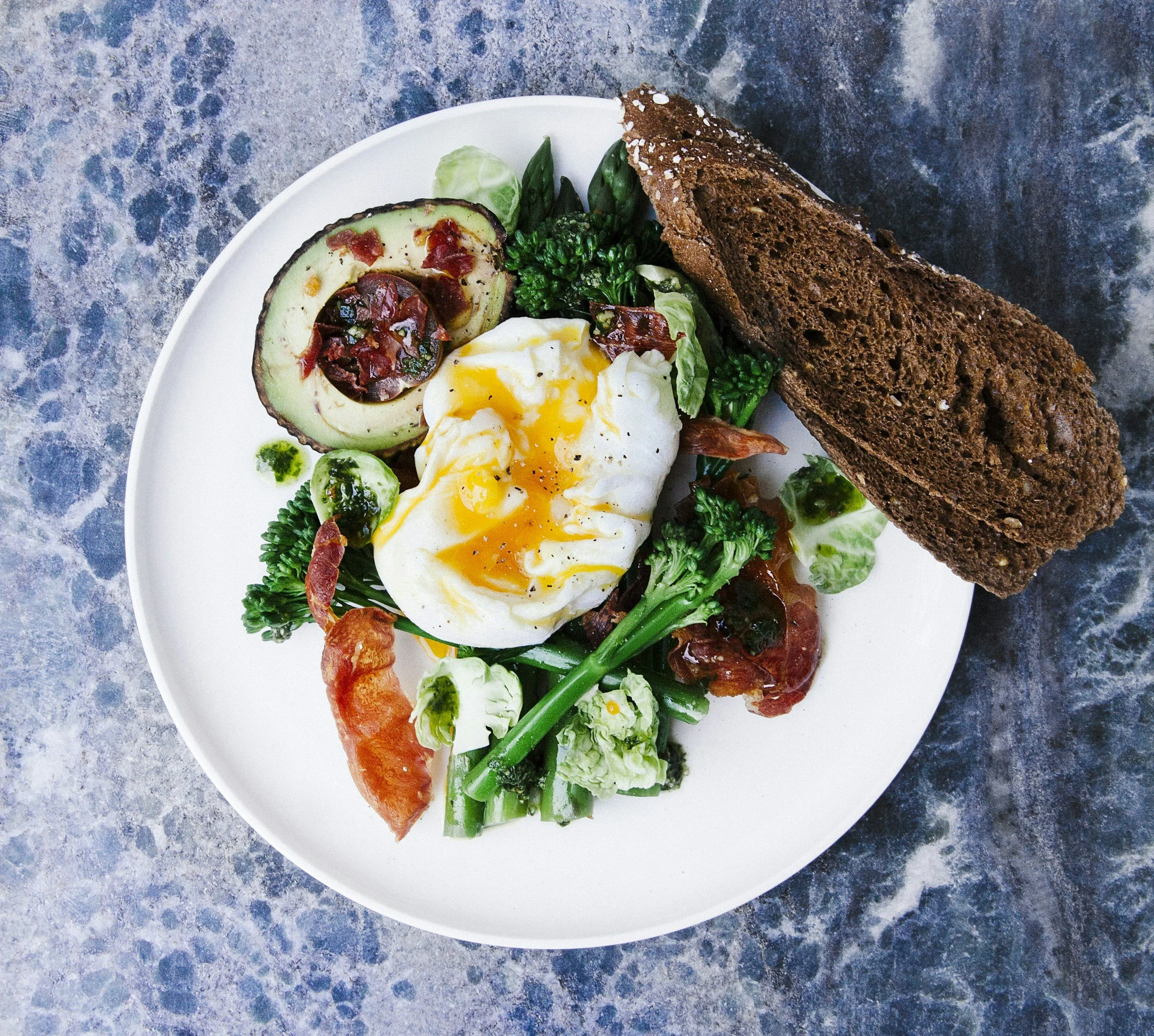
Most people underestimate what their body needs, because they only count the obvious things. Here is what gets left out of the math.
Physiological stress creates two needs:
More nourishment/fuel for your body
Better regulation of blood sugar
Whether you are UNDER-FUELED and/or UNDER-REGULATED = Consistent, Balanced Meals + Snacks
Skipping Breakfast? > Passing up on your body’s optimal metabolic window.
Breakfast is what prevents hunger later in the day. Take the same meal: eat it at breakfast, and eat it at dinner. Your blood sugar raises less at breakfast than it does at dinner: (1)
insulin comes out faster and stronger to help manage blood sugar
muscle absorbs sugar more readily
You skip breakfast? You burn less calories. Skipping breakfast lowers energy expenditure. It makes you hungrier later and raises cravings (so even when you eat more later, it’s not satiating enough) (2, 3).
Stress = Cravings
Your brain is about 2% of your body weight and uses roughly 20% of your resting energy. It runs mostly on glucose (4).
A day of back-to-back meetings, decisions, studying, caretaking, or holding it together for everyone else is not "sitting around doing nothing." In fact, it’s racking up stress, and stress racks up cravings.
Stress alone doesn’t necessarily burn more calories, but it will throw off your blood sugar. (5). Blood sugar dips = strong cravings (6).
Cravings for high-calorie food specifically: studies show that even mild low blood sugar produces a greater desire for high-calorie foods, while normal blood sugar leads to lower interest in food (7).
The pull will be to reach for the quick-fix snack (salty/sweet). But your body is begging you to balance its blood sugar - so grab something with a protein, a carb, and a fat (apple with peanut butter; turkey, cheese, and some pretzels).
I can already hear you: I don't want to eat more though, I'm already over-eating!
I get it - but if your body is under-fueled or your blood sugar is imbalanced, that creates stress (8). If you have a cold without a fever, and push through, that creates stress. Stress fuels cravings, and when cravings stack up, they get so loud that you can't ignore them. Have the snack, damnit!
It seems emotional, right? But it’s physiologically driven. If you ignore it, your body will demand a payout later!
Your hormones move the target
Did you know cravings and appetite will fluctuate (sometimes significantly) depending on which phase of your cycle you’re in? For so many of my clients, those increased cravings are written off as emotional or "lack of willpower," rather than fueling their body’s cycle. Did you know that your resting metabolic rate raises anywhere between 30 – 200 kcal between your follicular and luteal phase (9)? Imagine you’re just a little extra hungry but push off that cue. Then you factor in that you’ve already been under-fueling, layer in the stress, the emotions -- guess who winds up “emotionally eating” later?
Sleep
So does sleep. Even a few short nights create stress which ultimately push your hunger hormones toward "eat more" AKA "help me regulate!"
If you eat the same lunch on a short-sleep, premenstrual Thursday that you eat on a rested Monday, your body will notice the difference, even if you don't.
More Movement
You move more than you think – your steps do a lot.
People count workouts. They don't count the shift on their feet, the upright posture, mindless fidgeting, the day at the theme parks, the toddler on one hip, the walk across campus, or the hour of cleaning (10).
All of it costs energy. And if you did work out, your body is going to ask for that energy back. Often a few hours later. Sometimes the next day.
Being sick or run down costs energy
Fighting off a cold, healing from an injury, recovering from surgery or a brutal week: repair work is energy-hungry (11). Yet we push ourselves to do the workout anyway.
Did you know that if you have a fever, your resting metabolism raises by roughly 6–7% for every 1°F above normal. For most adults, a sustained 101–102°F fever burns roughly 200 to 400 extra calories a day at rest (12). (source)
Feeling run down? If you’re feeling run down without a fever and not resting, you’re creating stress. You may not “burn” more, but your blood sugar will be thrown off and cravings will increase.
You may be starting every day behind
Then there is the baseline. If you're dieting, "eating clean," skipping breakfast, or cutting carbs, you start each morning already short.
Your body doesn't know it's a wellness plan. It reads it as not enough food. (More on that in what the research says about diet fads.)
Put these together, and many of the people I work with are running well below what their body is spending by mid-afternoon, without any idea that it's happening.
"It's Just a Craving": How Hunger Gets Dismissed
Put all of this together, and many of the people I work with have cravings building by lunchtime.
Your body sends early signals. They are quiet, and they are easy to explain away:
Thinking about food in the middle of a task
Trouble concentrating, or rereading the same email three times
Feeling irritable or "over it"
A dip in energy, a dull headache, feeling cold
Wanting something sweet at 3 PM
Most of us have been taught to answer those signals the same way.
"I just ate."
"I'm not really hungry. I'm just bored."
"It's just a craving. Drink some water."
"I'll wait until dinner."
So you push it off. More coffee. Gum. A sparkling water. Back to work.
A craving is information -- not a sign you lack discipline.
And when your body's information gets ignored, your body doesn't drop it. It turns up the volume.
The signal you dismissed at 11, and again at 1, and again at 3, doesn't disappear. It stacks.
By the time you walk in the door at 6, or sit down on the couch at 9, you aren't dealing with one craving. You are dealing with a whole day's worth of them, arriving at once.
Why It's Always the Chips, Cookies, and Cereal
Nobody stands in the pantry at 9 PM craving grilled chicken and broccoli. There's a reason.
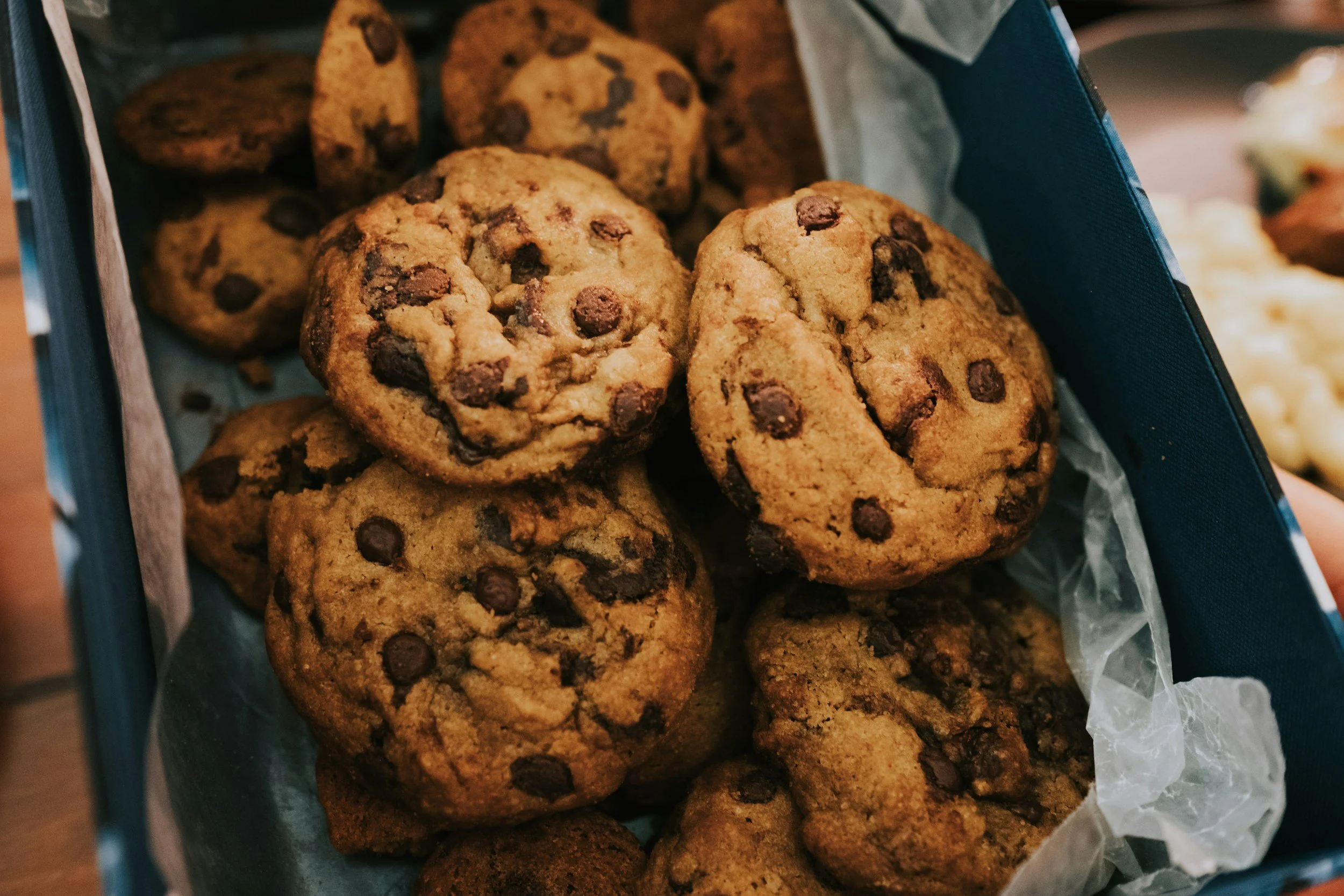
When you've gone a long time without enough fuel, your body is not looking for a balanced plate. It is looking for the fastest, most concentrated energy it can find.
That means sugar and refined carbs, which raise blood sugar quickly. And fat, which packs a lot of energy into a small amount of food. Put them together and you get ice cream, chips, cookies, pizza, cereal.
Brain imaging research backs this up. When people are hungry, the brain's reward centers respond more strongly to high-calorie foods. Those foods become hardest to resist at the exact moment you are most depleted (13).
A depleted brain is also worse at slowing down. So you eat fast. Standing up. Past the point of comfortable. Barely tasting it.
That is a body that waited all day and finally got the chance to catch up. It feels urgent because, from your body's point of view, it IS urgent.
Then the Shame Shows Up
What happens next matters as much as the eating does.
You feel overfull. Disappointed. You call yourself lazy and unmotivated. You wonder how you can run a team, raise kids, or finish a degree, and still lose a fight with a box of crackers.
And then you make a plan.
"Tomorrow I'll be good."
So tomorrow you skip breakfast, because you're still full, or because you feel like you haven't earned it. You keep lunch light to make up for last night. You push through the afternoon cravings even harder.
And at 9 PM, you are back in the pantry.
Here is the whole loop:
You under-fuel during the day, on purpose or by accident.
You dismiss the early signals as "just cravings."
You hit the wall in the evening and eat fast, energy-dense food.
You feel ashamed and decide you lack willpower.
You compensate tomorrow by eating less.
Repeat.
Shame is not a side effect of this cycle. It is the engine.
Shame is what sends you back to step one. Every round seems to prove the willpower story. And the willpower story always prescribes the same thing: eat less, try harder. Which guarantees the next round.
GIRL - You cannot shame your way out of a pattern that shame is quite literally powering.
How to Stop "Emotional" Eating: Work With Your Body, Not Against It
Before you ask "What am I feeling?", ask a simpler question.
"Am I FED?"
F: Fuel
When did I last eat, and was it a real meal?
Coffee is not breakfast. A protein bar at your desk is a snack, not lunch. If it has been more than three or four hours, or what you ate was more of a placeholder than a meal, start here.
E: Energy spent
What has my body done today that I'm not giving it credit for?
A long workday. A hard workout. A bad night of sleep. The week before your period. Getting over a cold. Hours on your feet. A draining conversation.
Any of these means your needs are higher than usual today. Higher needs are not a problem to manage. They are a reason to eat more.
D: Delay
How long have I been putting this off?
Did you first think about food an hour ago? Three hours ago? The longer the delay, the louder and more urgent it gets. The answer is not to hold out longer. It is to eat now, before the volume goes up again.
If the FED check turns up a gap, you are not having an emotional eating problem right now. You have a hungry body. Feed it.
Sources
Morris et al. (2015). Endogenous circadian system and circadian misalignment impact glucose tolerance via separate mechanisms in humans. PNAS
Ruddick-Collins et al. (2022). Timing of daily calorie loading affects appetite and hunger responses without changes in energy metabolism in healthy subjects with obesity. Cell Metabolism
Vujović et al. (2022). Late isocaloric eating increases hunger, decreases energy expenditure, and modifies metabolic pathways in adults with overweight and obesity. Cell Metabolism
Raichle (2009). A paradigm shift in functional brain imaging. Journal of Neuroscience
Chaput et al. (2008). Glycemic instability and spontaneous energy intake: association with knowledge-based work. Psychosomatic Medicine
Wyatt et al. (2021). Postprandial glycaemic dips predict appetite and energy intake in healthy individuals. Nature Metabolism
Page et al. (2011). Circulating glucose levels modulate neural control of desire for high-calorie foods in humans. Journal of Clinical Investigation
Tomiyama et al. (2010). Low calorie dieting increases cortisol. Psychosomatic Medicine
Hurtová et al. (2026). Resting metabolic rate fluctuations across the menstrual cycle: a systematic review. Frontiers in Physiology
Levine et al. (2006). Non-exercise activity thermogenesis: the crouching tiger hidden dragon of societal weight gain. Arteriosclerosis, Thrombosis, and Vascular Biology
Muehlenbein et al. (2010). Toward quantifying the usage costs of human immunity. American Journal of Human Biology
Physiology, Fever. StatPearls, NCBI Bookshelf
Goldstone et al. (2009). Fasting biases brain reward systems towards high-calorie foods. European Journal of Neuroscience
Other Helpful Blog Posts
How to Stop Binge Eating Right Now: 10 Steps for When the Urge Hits
Intuitive Eating vs. Paleo, Keto, and Intermittent Fasting: What the Research Says
Tired of being stuck in cycles of disordered eating? Therapy too expensive? Try our course!
Eating Disorder Recovery Support at Bloom Psychological in Orlando, FL, is Here to Help
If any part of this felt familiar, please hear this clearly: I know how hard this feels - and you are not alone.
Eating disorders are isolating by design, but healing happens in connection, with support that understands both the clinical reality and the human one.
At Bloom Psychological, we offer compassionate, parent coaching, and evidence-based eating disorder therapy in Orlando, FL that honors you, your body, and your future.
Whether you are early in recovery, stuck in a cycle you cannot untangle, or looking for a therapist who truly gets both the struggle and the way through it, we are here.
About Dr. Kait
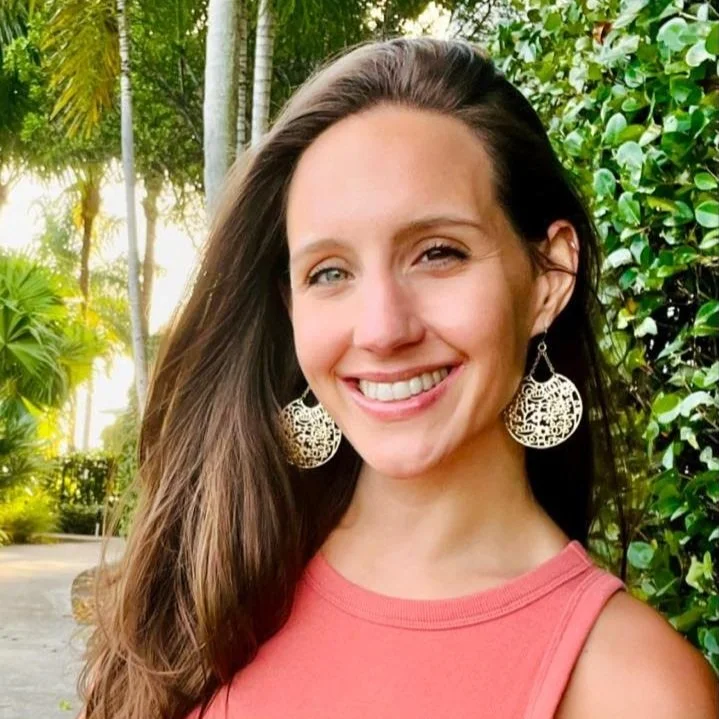
Orlando may be where I live now, but my Jersey upbringing is still a big part of how I move through the world: direct, grounded, and genuine.
That same authenticity shapes how I work with clients and how I write pieces like this one. I want these blogs to feel like a steady hand on your back, or for the huggers out there - a warm one of those.
Especially if you are navigating complex trauma, people-pleasing patterns, or eating disorder recovery, and wondering why certain seasons feel harder than others.
Outside of therapy, I am a mom, a lifelong animal lover, and someone who understands recovery from the inside out.
My knowledge and passion for treating trauma and eating disorders is not only professional: it is lived.
I have experienced the way survival mode can take over a body and a life, and I have also experienced the slow, brave work of healing. That history helps me sit with clients in a way that is compassionate, honest, and rooted in real hope, not platitudes.
If you are searching for eating disorder recovery or trauma therapy in Orlando for yourself or someone you love, I hope this blog helps you feel understood and gives you a clearer next step. You deserve support that fits your nervous system, your story, and your pace, and you do not have to find your way through this alone.
