What to Say When Your Daughter Says "I'm Fat": a Guide for Parents from an Eating Disorder Psychologist
Or: "I'm not skinny like the other girls."
You walk past the bathroom and your daughter is standing at the mirror, pulling at her shirt, crying. "I'm so fat," she says. Or she comes home from a sleepover quiet, and at bedtime it comes out: "I'm not skinny like the other girls."
Everything in you wants to fix it, right now, with the truest thing you know: No, you're not. You're beautiful.
That instinct comes from love. It also tends not to bring the relief you are both hoping for. Here is why, and what to do instead.

This isn't really about her body.
"Fat" is not a feeling. But for many girls it has become the word for a whole pile of feelings: left out, not good enough, anxious, ashamed, overwhelmed, out of control.
Somewhere along the way, your daughter may have paired those uncomfortable feelings with her body. A hard feeling and a physical trait got wired together. Now, when the feeling shows up, her mind skips right past it and lands on her stomach, her thighs, her arms.
This makes sense in the world she is growing up in. Our culture teaches girls that if their body is acceptable, they are acceptable. So when her confidence dips (a friend leaves her out, a test goes badly, she feels behind), her body becomes the quickest thing to fix to feel better. Changing her body can feel more doable than sitting with the feeling underneath.
So when she says "I'm fat," she is usually telling you, I feel something awful and I don't have another word for it. If we answer only the body part, we miss the message.

The common response pulls (we all feel them)
If you have said any of these, you are in very good company. Every one is a loving, natural response, and nearly every parent reaches for them (therapists who are parents included). Nothing here means you have done harm. These responses simply aim at the body, when the hurt is somewhere else.
Reassurance: "You're not fat! You're beautiful."
This is the strongest pull, because it is true and you want her to believe it. It often helps for a moment. Then the feeling tends to return, because the feeling was never really about her body. Without meaning to, reassurance can also suggest that fat is something to fear and that her body is the place to look for answers. Many parents notice they are being asked more and more often, and that the comfort lasts less and less.
Logic: "You're a healthy weight. The doctor said so."
It makes sense to offer facts when your child believes something untrue. The difficulty is that feelings rarely respond to evidence, so the conversation can turn into a debate that leaves you both worn out.
Minimizing: "Don't be silly. You're fine."
This usually comes from wanting to lift the weight off her quickly. Your daughter might interpret it as the things bothering her most seeming silly to you, and learn to stop sharing them.
Fixing: "We could start eating healthier together."
You are offering to be on her team, which is a wonderful instinct. She may hear it as agreement that her body is a problem to be solved, and that changing her shape is how hard feelings get better.
Comparing: "You're thinner than half those girls."
You are trying to show her what you see. It can accidentally reinforce that thin is the goal and that other girls are the measuring stick.
Relating: "I know. I hate my stomach too."
You want her to feel less alone, and that matters. She may take away that disliking your body is simply part of being a woman.
"That's just the eating disorder talking."
If your daughter is in treatment for an eating disorder, you have probably been coached to separate her from the illness, and you are right: it is the eating disorder. But in that moment the thought is very convincing to her, and being told it isn't real can leave her alone with it. She needs help standing up to it. You might try: "It sounds like the eating disorder is pretty loud right now?" That keeps the illness separate from her and keeps you beside her.
What these share is that they answer the body. What helps most is answering the feeling. The good news is that you only need one small change of direction, and the steps below show you how.
What to do instead: help her feel SAFE
SAFE stands for Shift, Anchor, Find the feeling, Energy.
It is easy to remember because it is also the goal: before anything else, she needs to feel safe with you. The order matters. A flooded brain can't talk about feelings, so you calm her body first and get curious second.
S: Shift her attention
Your first job is to gently break the lock between her eyes and the mirror, the clothing, whatever the trigger might be. Ask before you approach.
"Hey, sweetheart. Can I come in?"
"Hey, maybe we come out of the bathroom for a minute. Come sit with me."
Move away from whatever set this off: the mirror, the phone, the photo, the pile of clothes that didn't fit. Don't comment on what she was looking at. Just shift away from the immediate trigger.
A: Anchor her body
Before any talking, help her body settle. Offer, don't insist.
"Do you want to sit with me?"
"Can I give you a hug?"
"Let's take a few slow breaths together."
F: Find the feeling
Now make room for the thoughts and feelings. Stay warm, curious, and validating. You are not agreeing that she is fat and you are not arguing that she isn't. You are interested in what it is like to be her right now.
"That sounds really painful. Tell me about it."
"What's that like, when that thought shows up?"
"How loud is it today?"
"When did it start getting loud? It sounds like it’s been tough today.”
"Sometimes feeling fat actually means you’re feeling something else, if that feeling had another name besides 'fat,' what would it be?"
Validate what you hear:
"That makes sense. Feeling left out is awful." "Of course you're upset."
“I can only imagine how hard it is to walk around feeling so uncomfortable all day.”
“It’s got to be so overwhelming to be in your head with such a mean voice screaming.”
Very often, something else surfaces here: the group chat she wasn't in, the grade, the comment someone made at practice. That is the real thing. You don't have to fix that either. Hearing it is enough. Or, it might just be a strong “fat attack.” Either way, you’re validating the experience of the attack - not what it is saying.
If she pushes ("Just tell me, am I fat?"), you can step out of the trap kindly:
"Your brain wants reassurance right now and I’d love to give it to you, but it doesn’t ever stick and leaves you more anxious after.”
E: Shift the energy
Once she has had space to feel the emotions in your safe presence, invite her to help change the energy. Ask if she would be open to changing her energy.
Put on her favorite song and dance in the kitchen
Watch an episode of her comfort show together
Do something creative: bake, draw, paint nails, build something
Walk the dog or shoot baskets, for fun and not for exercise
Pick something that pulls her into the present and into connection with you.
What to expect
This will feel unnatural at first. Skipping the reassurance can feel like withholding comfort. You are not withholding it. You are aiming it at the right target.
She may get frustrated the first few times, especially if reassurance has been the routine. That is normal. Stay warm and stay the course.
You will also slip and say "You're not fat!" It's fine. You can always add, "And I'm wondering what's going on underneath that."
Over time, SAFE teaches her something bigger than a single good moment: that "I feel fat" is a signal to look inward, that feelings pass when they are felt, and that she can bring hard things to you.
When to reach out for more support
Body distress is common in adolescence. Talk with your pediatrician or an eating disorder specialist if you also notice:
Skipping meals, cutting out foods, or new food rules
Weight loss, or falling off her growth curve
Exercising in a driven or secretive way
Leaving for the bathroom right after eating
Pulling away from friends, or avoiding eating with others
Body thoughts that seem to take up most of her day
Early support makes a real difference, and you do not need to wait until you are sure.
This post is for education and is not a substitute for individualized medical or mental health care.
Other Helpful Blog Posts
Parent-Focused Therapy + Coaching for Eating Disorders: How Family-Based Treatment Actually Works
Family-Based Treatment in Eating Disorders: A Guide to Treatment
A Support Person’s Guide: How to Help Someone with an Eating Disorder
Help My Daughter is Barely Eating But Says She’s Fine! An Orlando Eating Disorder Therapist Responds

Eating Disorder Recovery Support at Bloom Psychological in Orlando, FL, is Here to Help.
If any part of this felt familiar, please hear this clearly: I know how hard this feels - and you are not alone. Eating disorders are isolating by design, but healing happens in connection, with support that understands both the clinical reality and the human one. At Bloom Psychological, we offer compassionate, parent coaching, and evidence-based eating disorder therapy in Orlando, FL that honors your daughter, you as a parent, your family, and your future. Whether you are early in recovery, stuck in a cycle you cannot untangle, or looking for a therapist who truly gets both the struggle and the way through it, we are here.
Let us help you find your glow.
Learn More About Eating Disorder Therapy in Orlando, FL
Take the First Step Toward Recovery Today
Other Therapy Services at Bloom Psychological
At Bloom Psychological, we know that trauma can impact every part of life—far beyond food or body image. That’s why, in addition to Therapy for Complex Trauma and Therapy for Eating Disorders, we offer specialized support for individuals navigating a wide range of emotional challenges.
Our trauma and complex PTSD therapy helps you safely explore painful past experiences, rebuild trust in yourself, and create a foundation for deep, lasting healing. We also offer eating disorder therapy and support, and individualized support for UCF students facing stress, identity questions, and mental health concerns in the midst of a pivotal life chapter.
Wherever you are in your healing journey, Bloom Psychological offers a compassionate, trauma-informed space to be seen, heard, and supported.
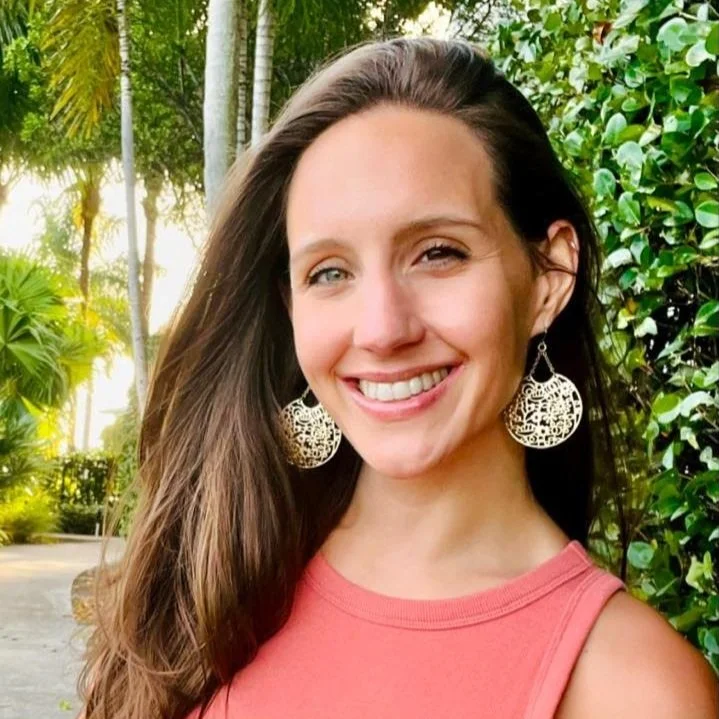
About the Author
Orlando may be where I live now, but my Jersey upbringing is still a big part of how I move through the world: direct, grounded, and genuine. That same authenticity shapes how I work with clients and how I write pieces like this one. I want these blogs to feel like a steady hand on your back, especially if you are navigating complex trauma, people-pleasing patterns, or eating disorder recovery, and wondering why certain seasons feel harder than others.
Outside of therapy, I am a mom, a lifelong animal lover, and someone who understands recovery from the inside out. My knowledge of trauma and eating disorders is not only professional. It is lived. I have experienced the way survival mode can take over a body and a life, and I have also experienced the slow, brave work of healing. That history helps me sit with clients in a way that is compassionate, honest, and rooted in real hope, not platitudes.
If you are searching for eating disorder recovery or trauma therapy in Orlando for yourself or someone you love, I hope this blog helps you feel understood and gives you a clearer next step. You deserve support that fits your nervous system, your story, and your pace, and you do not have to find your way through this alone.
