“Why Do I Hate My Body?” Understanding Body Image Through the Lens of a Complex Trauma Therapist in Orlando
In a world that markets “self-improvement” like the newest iPhone, focusing on anything other than “what should I change about myself next?” can feel challenging. If you are already struggling with low self-esteem, the allure of a “glow-up” can feel exciting, addictive even. Living in this body feels intolerable, and I need to change.
So, what gets us to the point of “I hate my body?” Great question. The answer is rarely shallow. Body hatred is almost always a learned response. It is shaped by the environments we live in, the messages we absorb, the way we are treated, and the way Complex Trauma teaches the nervous system to survive.

How Constant Comparison Fuels Body Hate in Complex Trauma
Let’s take a look at the typical person’s social media use. Globally, on average, each person spends two and a half hours a day scrolling platforms like TikTok and Instagram. The amount of time spent looking at each reel? Three seconds. That is a lot of visual stimuli bombarding us at rapid fire, and we have to be honest, what we are seeing is not exactly a healthy or equal representation of different body types. Rather than getting an accurate perspective of the beauty in all of our differences, we are bombarded over and over with one picture: “fit” and skinny. So I will ask, how does it make you feel?
For many people, especially those carrying Complex Trauma, comparison does not land as neutral. It lands as a threat. When your nervous system already believes you are not safe, not enough, or not worthy, constant exposure to narrow beauty ideals reinforces that story in a way that feels factual, even when it is not.
Why Complex Trauma Can Pair Shame With the Body
There are just some experiences in life that leave us feeling terrible. Humiliated, disgusted, ashamed, anxious, hopeless. Emotions are so strong that all we want to do is escape. This is especially true in traumatic events or in survivors of abuse. When you feel trapped inside yourself, sometimes the only way to “leave” is for your mind to separate itself from your body.
During these overwhelming experiences, our minds begin to associate our bodies with the problem. Instead of feeling helpless, like “this is unbearable,” we find something we can fix, shifting into “that is unbearable, let’s change that.” By pointing fingers at our bodies, they become objects that are humiliating, disgusting, shameful, anxiety-provoking, etc. The further we can distance ourselves from them, the further we can “escape” those emotions.
This is one of the most misunderstood elements of body image struggle. For trauma survivors, body hatred is often a survival strategy. It is the mind trying to relocate unbearable feelings into something that seems controllable.
The Desire for Connection and the Complex Trauma Body Story
If we feel lonely, rejected, or struggle with low self-esteem, it is only natural to think: what can I do to make people like me? What can I do to be more popular? Often at the top of that list is appearance. Whether it is changing your wardrobe, losing weight, getting “fit,” or trying new make-up regimes, the common denominator is the same: change your body.
When Complex Trauma has taught you that belonging is conditional, the body often becomes the bargaining chip. Your brain learns, “If I look different, maybe I will be safer. Maybe I will be loved. Maybe I will be chosen.” That belief is not vanity. It is an aching human hope shaped by pain.
How Cultural Conditioning Reinforces Body Image Fixation and Complex Trauma Responses
In Western culture, appearance and beauty are high up there on the list of values. We are surrounded by ads for Botox, anti-aging, “how to lose 20 lbs in a month,” and it is difficult not to get sucked into that messaging. Our family members and friends are not immune to this. It is all too common that a family member or loved one themselves will be hyper-focused on their appearance and make comments that unintentionally reinforce how important looks are to them, regardless of whether they are positive or negative. Frequent comments about appearance hammer home just how high up on the list of priorities it needs to be for us.
For someone with Complex Trauma, this cultural pressure often hits deeper. Trauma primes the brain to overinterpret external messages as personal truths. So when a culture repeatedly says “your body is your value,” the trauma brain does not question it, it absorbs it.

Childhood Criticism, Bullying, and the Roots of Complex Trauma Body Shame
Whether it is being called fat, made fun of for acne, or something seemingly benign, such as being encouraged to lose weight by your family doctor, these messages stick. From the ages of 6 to 18, youth are amidst developmental stages that ask two questions: what can I feel proud of myself for, and who am I? When the world tells them who they are, they listen, and if it involves their body, it gets channeled directly into that. “I am fat.” “I am ugly.”
These identity statements often become part of Complex Trauma. Not because of one comment alone, but because of repeated emotional injury that shaped how safety and worth were defined.
What Can We Do About It? Healing Body Image With Complex Trauma Tools
So what can we do about it to feel better? The goal is not to force yourself into loving your body overnight. The goal is to understand what your body hatred is protecting you from, then gently rebuild safety, connection, and self-trust.
Resetting Comparison Without Losing Yourself
Reboot Your Social Media
It is time to reboot and reprogram your social media. You can reprogram your algorithm or, better yet, get off of it altogether. In the meantime, make sure to follow body positive accounts or influencers who post about dream vacations, your hobbies, making new recipes, you name it.
Replace the Habit
When we are bored or have a desire to disconnect, we turn to social media, a very strong habit we have formed. If we want to change a habit, we need to replace it with something else. Every time you want to scroll, pick one specific thing to do instead. Pick up a new book, choose a new app to use, learn new vocabulary words, learn a new language, or even call a friend.
Reprogram Your Social Media Algorithms
TikTok, how to reset what you see:
Clear your history. Go to your profile, open the menu, choose Settings and Privacy, then Activity Center, Watch History, and clear it. Also, clear your search history.
Use “Not interested.” When a video makes you feel bad or shows content you don’t want, press and hold on it and select “Not interested.” Do this often for a few days so TikTok learns what not to show you.
Like what you want more of, actively like and comment on videos you enjoy or that feel good to watch. Scroll past anything that feels negative or stressful without watching it.
Filter keywords. Go to Settings, choose Content Preferences, and add words or topics you want to avoid, for example, “what I eat in a day” or “body check.”
Optional hard reset. If your feed still feels bad, delete and reinstall TikTok. When you start again, only like and search for content that feels healthy or uplifting.
Instagram, how to reset what you see:
Clear your search and explore history. Go to your profile, open the menu, tap Your Activity, then Recent Searches, and clear them. On the Explore page, tap the three dots on posts you don’t like and choose “Not interested.”
Unfollow or mute accounts. Unfollow accounts that make you feel worse, or mute them if you want to stay connected but not see their posts.
Engage with the right content. Like and save posts that make you feel calm, supported, or inspired. This teaches Instagram what to show you.
If your feed doesn’t change, clear the app’s cache in phone storage settings or temporarily deactivate your account to give yourself a clean start.
Rebuilding Safety When Complex Trauma Lives in the Body
When your brain has paired shame, fear, or disgust with your physical body, the goal is not to force yourself into “loving your body.” Trauma recovery requires rebuilding safety, not positivity. Start slowly by reconnecting to neutral sensations. The nervous system learns safety through tiny repeated cues, not grand gestures. You might tune into the warmth of a mug in your hands, your feet on the floor, a soft blanket, or water hitting your back in the shower.
When body hate thoughts show up, pause and ask: What emotion am I feeling right now? Where else have I felt this? Is this actually about my body or about a feeling that is too big? Often, the problem is not your stomach; it is shame, loneliness, anxiety, or a sense of failure that your brain has learned to relocate into the body. One practical way to break that pattern is to write two columns. Column A, the body part you are hating. Column B, the emotion underneath. This trains your brain to attach the emotion back where it belongs.
Then offer your body a repair reflection. Counter the internalized shame with a trauma-informed self-statement like: “My body didn’t cause the pain I went through.” “My body survived what happened.” “I don’t have to love this part yet, just not punish it.”

Connection is the Need, Not Perfection
When loneliness or low self-esteem leads you to think that changing your body will make you more likable, pause. The real need is connection, not perfection. Ask yourself: Am I trying to be admired or understood? What kind of connection do I actually crave? Who in my life makes me feel safe without changing my appearance? This disrupts the automatic belief that thinner equals more lovable.
Then build identity outside appearance. Make a list of things you value about yourself that have nothing to do with your body, humor, creativity, compassion, intelligence, leadership, or passion. This helps widen the self-concept that may have shrunk to “How do I look?” Finally, create opportunities for genuine connection. Send a text, join a hobby group, play a game, go somewhere cozy, or invite someone into your world in a low-stakes way. Your body doesn’t create connection; shared experience does.
Detaching Worth From Appearance in Complex Trauma Recovery
Suppose you grew up hearing comments about appearance, or you are surrounded by people who prioritize looks. In that case, you have been conditioned, literally trained, to believe your body is one of your most important qualities. Begin by detaching morality from appearance. Practice phrases like: “Bodies change, that’s normal.” “My worth does not rise or fall with my weight.” “I’m allowed to take up space in any body.” You are rewiring decades of messaging each time you do this.
If a friend or family member constantly makes body comments, redirect the meaning. You might say: “How does it make you feel when you say those things about yourself?” “Tell me something good that happened today.” “When people reflect on the reasons they love you most, looks are not on the list.” You are not rejecting them; you are shifting the value system.
Also, notice the intent of what you are watching. Every ad, influencer, or video is sending a message about body value. Ask: Does this benefit from me feeling insecure? Is this supporting the version of me I want to be? Is this making me feel more at peace or more insecure? Curate your environment the same way you curate your home, intentionally.
Healing Childhood Body Shame With Complex Trauma Awareness
If body hatred started young, the narrative likely wasn’t yours to begin with. Someone handed you a painful story, and you kept carrying it. Identify whose voice it is by asking: Whose words are these? Who first made me feel this way about my body? Do I still believe them, or am I just repeating them? Naming the source is the first step in releasing it.
Then reparent the younger you. When shame shows up, respond the way a supportive caregiver should have: “You never deserved to be spoken to like that.” “You were always enough.” “Your body wasn’t the problem; their beliefs were.” Your brain doesn’t know the difference between internal and external comfort. It registers these statements as real healing.
Finally, rewrite the story in the present time. You might write the child version of you a letter, choose one memory where you internalized shame and reframe it, or imagine standing next to your younger self and saying, “I’ve got you now.” This interrupts the “I am ___” identity statements formed in childhood.
Closing Thoughts From an Eating Disorder Therapist: Complex Trauma is the Real Root of Body Hatred
If you have ever asked, “Why do I hate my body?” I hope you can see now that your answer is not about shallowness or weakness. Your body has been carrying stories, survival strategies, and cultural pressure for a long time. Complex Trauma does not just live in the mind. It lives in the body, in the way you learned to protect yourself, and in the way shame got attached to your physical self.
Healing body image is not about forcing confidence or pretending pain does not exist. It is about unhooking your body from shame, slowly rebuilding safety, and letting your worth become something deeper than appearance. This takes time. It takes repetition. It takes support. And it is possible.
Complex Trauma and Body Image Therapy at Bloom Psychological in Orlando, FL
If body hatred feels constant, exhausting, or tied to trauma you cannot shake, you do not have to work through it alone. At Bloom Psychological, we offer trauma-informed therapy for Complex Trauma in Orlando, FL, with a deep understanding of how trauma shapes body image, self-worth, and eating behaviors. Whether your body struggles are rooted in comparison, childhood criticism, abuse, or years of survival mode, we will help you rebuild safety in your body and relationship with yourself. Reach out today to schedule a free consultation and take your next step toward feeling more at home in your own skin.
Let us help you find your glow.
Learn More About Body Image Therapy in Orlando, FL
Take the First Step Toward Recovery Today
Other Therapy Services at Bloom Psychological
At Bloom Psychological, we know that trauma can impact every part of life, far beyond food or body image. That’s why, in addition to Therapy for Complex Trauma and Therapy for Eating Disorders, we offer specialized support for individuals navigating a wide range of emotional challenges.
Our trauma and complex PTSD therapy helps you safely explore painful past experiences, rebuild trust in yourself, and create a foundation for deep, lasting healing. We also offer eating disorder therapy and support, and individualized support for UCF students facing stress, identity questions, and mental health concerns in the midst of a pivotal life chapter.
Wherever you are in your healing journey, Bloom Psychological offers a compassionate, trauma-informed space to be seen, heard, and supported.
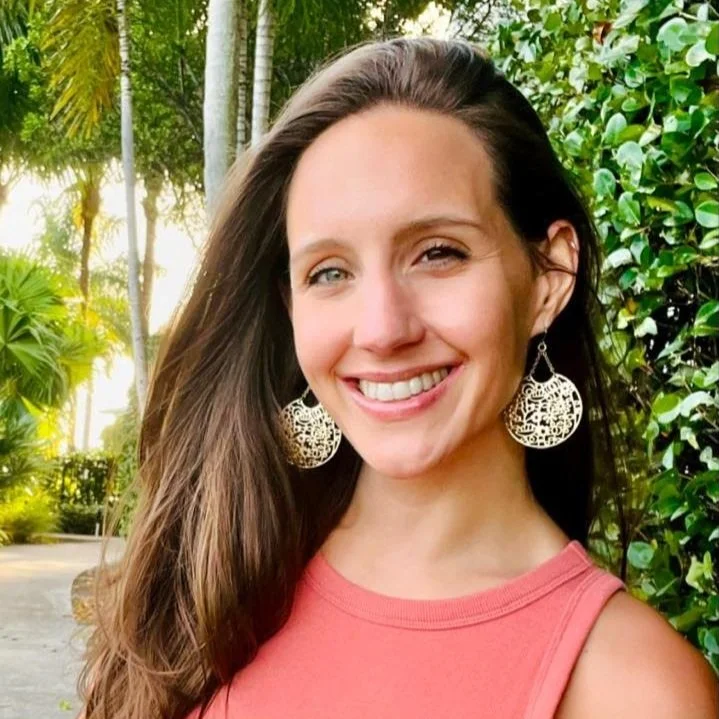
About the Author
Though I now call Florida home, my Jersey roots still shape who I am: honest, grounded, and authentic. I write resources like this because I want people to understand that body image pain is not shallow, and it is rarely just about appearance. Most often, it is about survival, Complex Trauma, shame, and the ways we learn to cope in a world that teaches us our bodies are projects to fix.
I am a therapist who specializes in trauma and eating disorders, and I also know this work personally. My perspective is both clinical and lived. I understand what it feels like when your body does not feel like a safe place to live, and I understand the slow, brave work of building safety back. That combination helps me meet clients with compassion, clarity, and real hope.
If you are looking for trauma therapy, eating disorder recovery, or body image support in Orlando, FL, my hope is that this blog helped you feel seen and offered a steadier place to start. You deserve care that feels human, safe, and lasting, and you do not have to figure this out alone.
